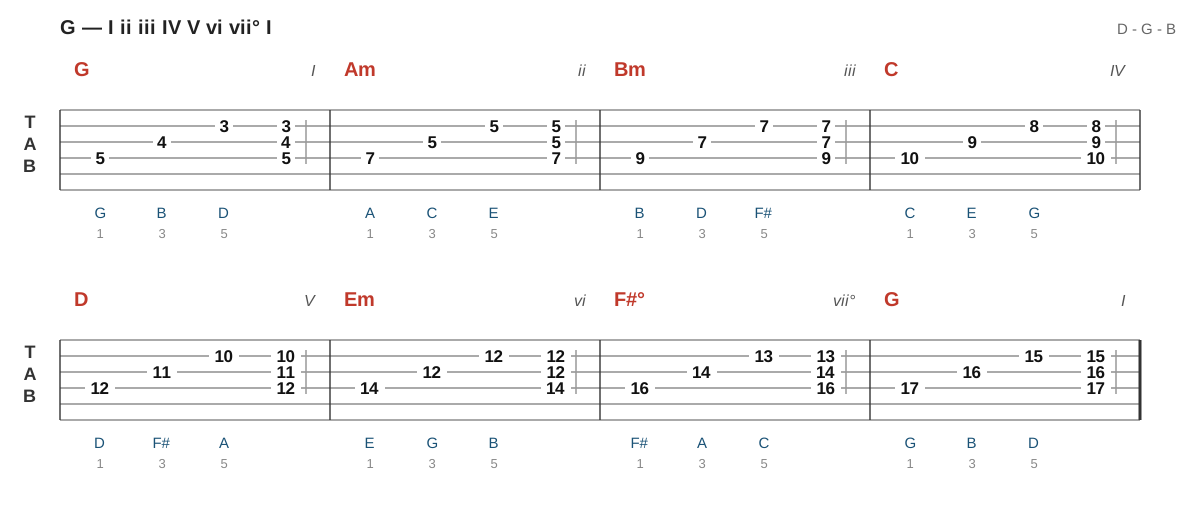
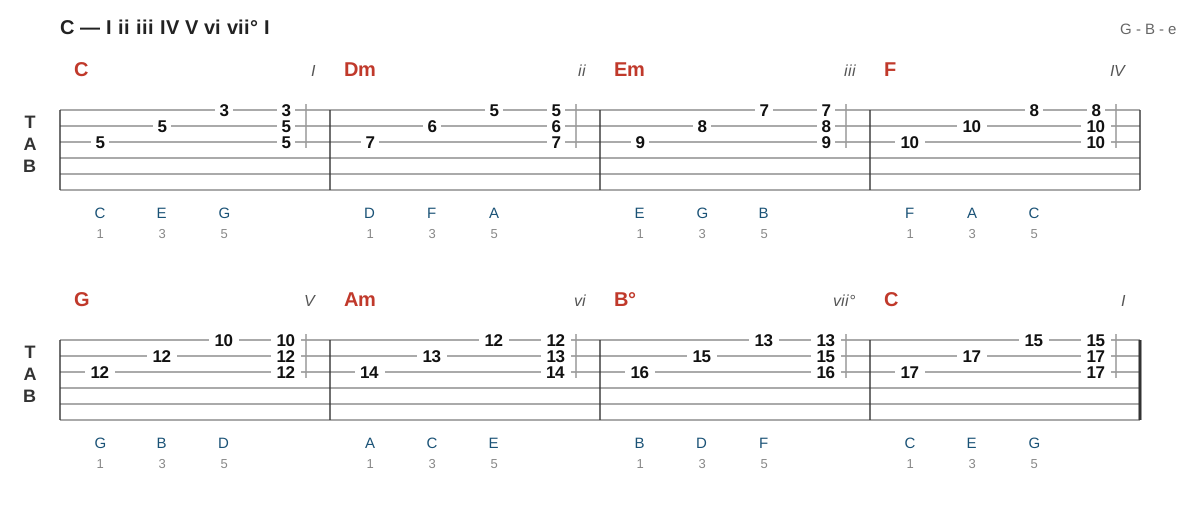
Harmonized major scale triads on 3 strings (G-B-E and D-G-B)★

 | Recommended tempo: 60 bpm
|
Instructions
Harmonizing a scale means building a chord on each of its notes using only notes from that scale. By stacking two thirds (every other note) on each degree of the major scale, you get seven triads, always in the same order:
- I major – ii minor – iii minor – IV major – V major – vi minor – vii° diminished
- In C major: C - Dm - Em - F - G - Am - B°
- In G major: G - Am - Bm - C - D - Em - F#°
In this exercise, each triad is played in root position on a set of 3 adjacent strings: the lowest note is the root (1), followed by the third (3) and the fifth (5). Play the three notes one at a time (arpeggio), then the full chord on beat 4, and climb the scale chord by chord up to the octave.
- Tab 1: C major scale on the 3 highest strings (G, B, high E).
- Tab 2: G major scale on the 3 strings starting from the D string (D, G, B).
The fingerings change from one string set to the other because of the B string tuning (a major third above G instead of a fourth): compare the shapes and see where the root, third and fifth sit. Note names and their function are shown below each tab.
Tips: play slowly with the metronome, let each note ring cleanly, then come back down the scale. Once the shapes are comfortable, say the chord name (or its degree) out loud as you play it: that is what will help you spot these triads in real songs.
Exercice 1
Triads of the harmonized C major scale on the 3 highest strings (G-B-E). Arpeggio 1-3-5 then the full chord; play slowly and cleanly.
Exercice 2
Triads of the harmonized G major scale on the D, G and B strings. Compare the shapes with tab 1: the B string shifts the fingerings.