Arpège
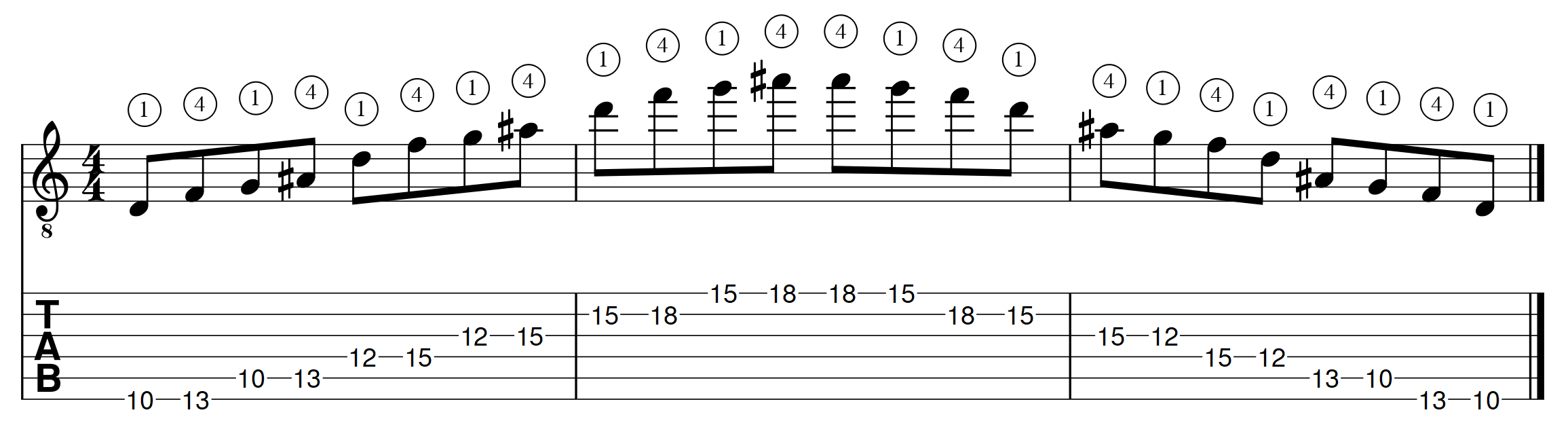
G minor 7 arpeggio (4/7)
Difficulté :

 | Tempo recommandé : 70 bpm
| Tempo recommandé : 70 bpm
Avis
0
Instructions
Learning arpeggios enriches your musical vocabulary, improves your improvisation, and makes your accompaniment (or self-accompaniment) less mechanical and more open. Jimi Hendrix, for example, used arpeggios extensively in his playing, as do jazz guitarists.
The goal is to know the following 7 arpeggios by heart:
- Minor (Root I - Minor third IIIb - Fifth V)
- Major (Root I - Major third III - Fifth V)
- Major 7th (Root I - Third III - Fifth V - Major seventh VIIM)
- Minor 7 (Root I - Minor third IIIb - Fifth V - Minor seventh 7b)
- Dominant 7th (Root I - Third III - Fifth V - Minor seventh 7b)
- Half-diminished or 7m5b (Root I - Minor third IIIb - Diminished fifth Vb - Minor seventh VIIb)
- Diminished seventh (Root I - Minor third IIIb - Diminished fifth Vb - Sixth VI)
Start slowly and, as always, focus on clean playing. The target tempo is 90bpm, but start slowly to get used to the small movements.
Exercice 1
G minor 7 arpeggio played vertically - first position
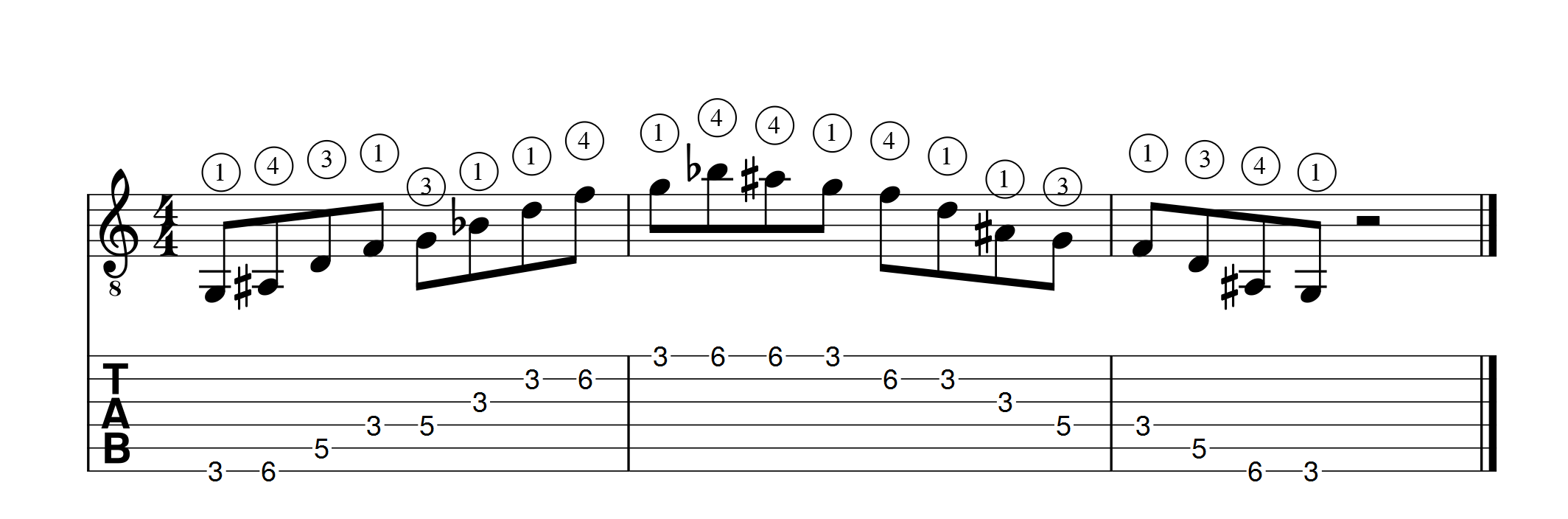
Exercice 2
G minor 7 arpeggio played horizontally - first position
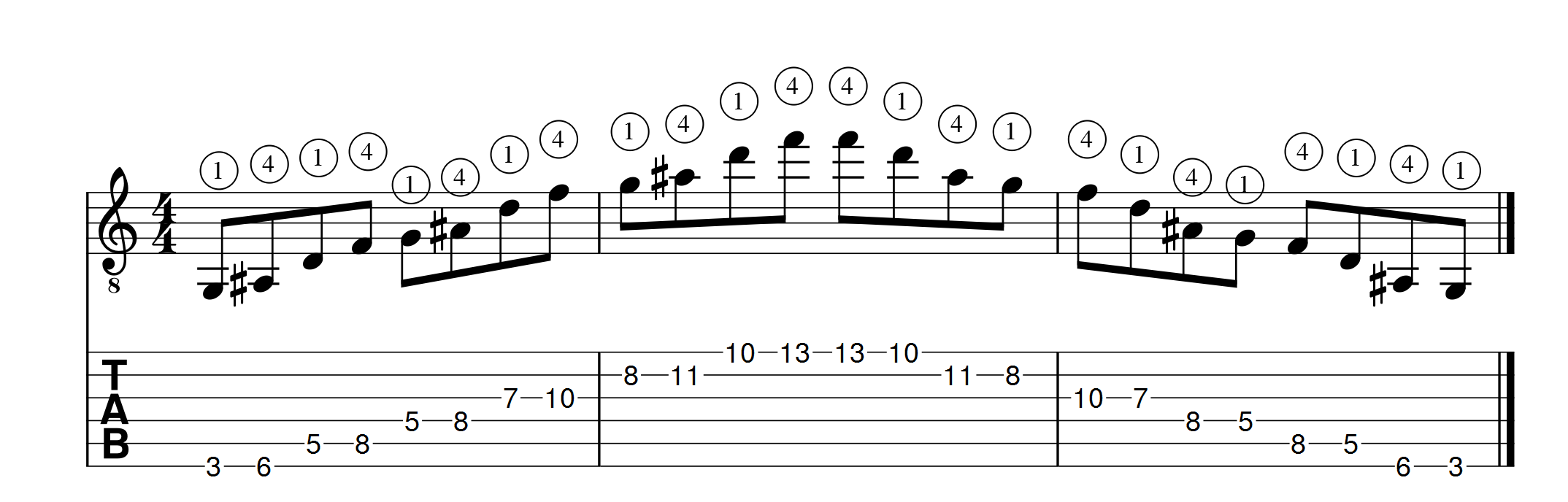
Exercice 3
G minor 7 arpeggio played vertically - second position
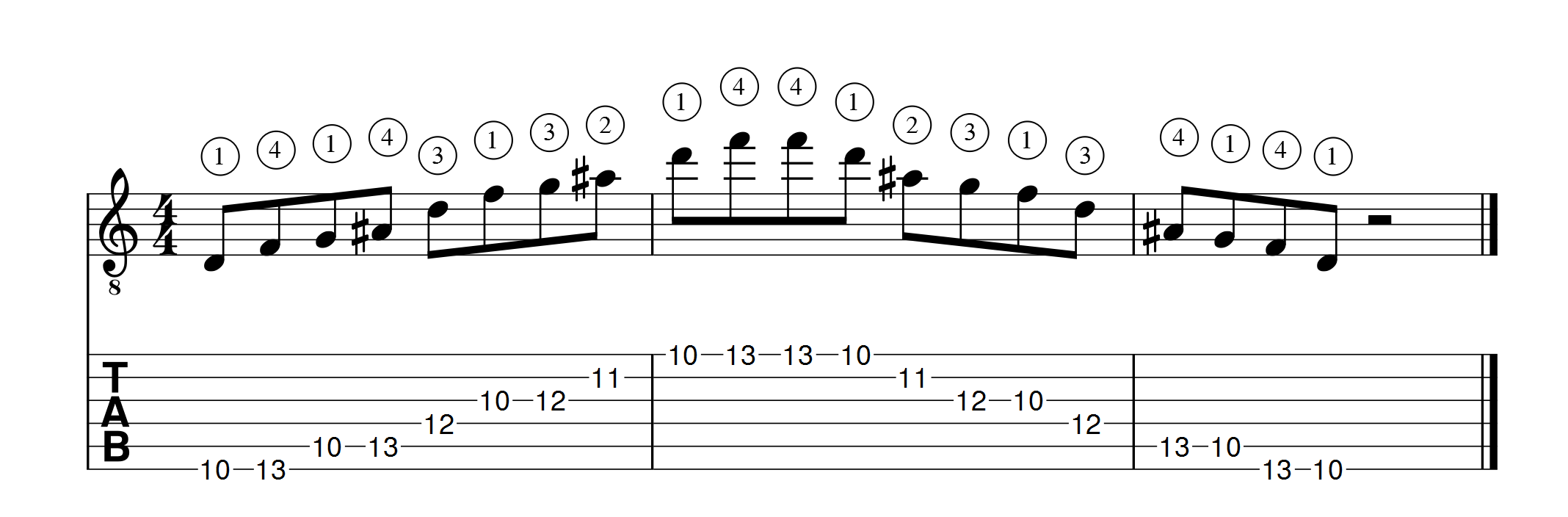
Exercice 4
G minor 7 arpeggio played horizontally - second position